Gateway N⁰¹: LA28 Olympic Gateway | El Segundo Gateway
100 N. Imperial Hwy El Segundo, CA 90245
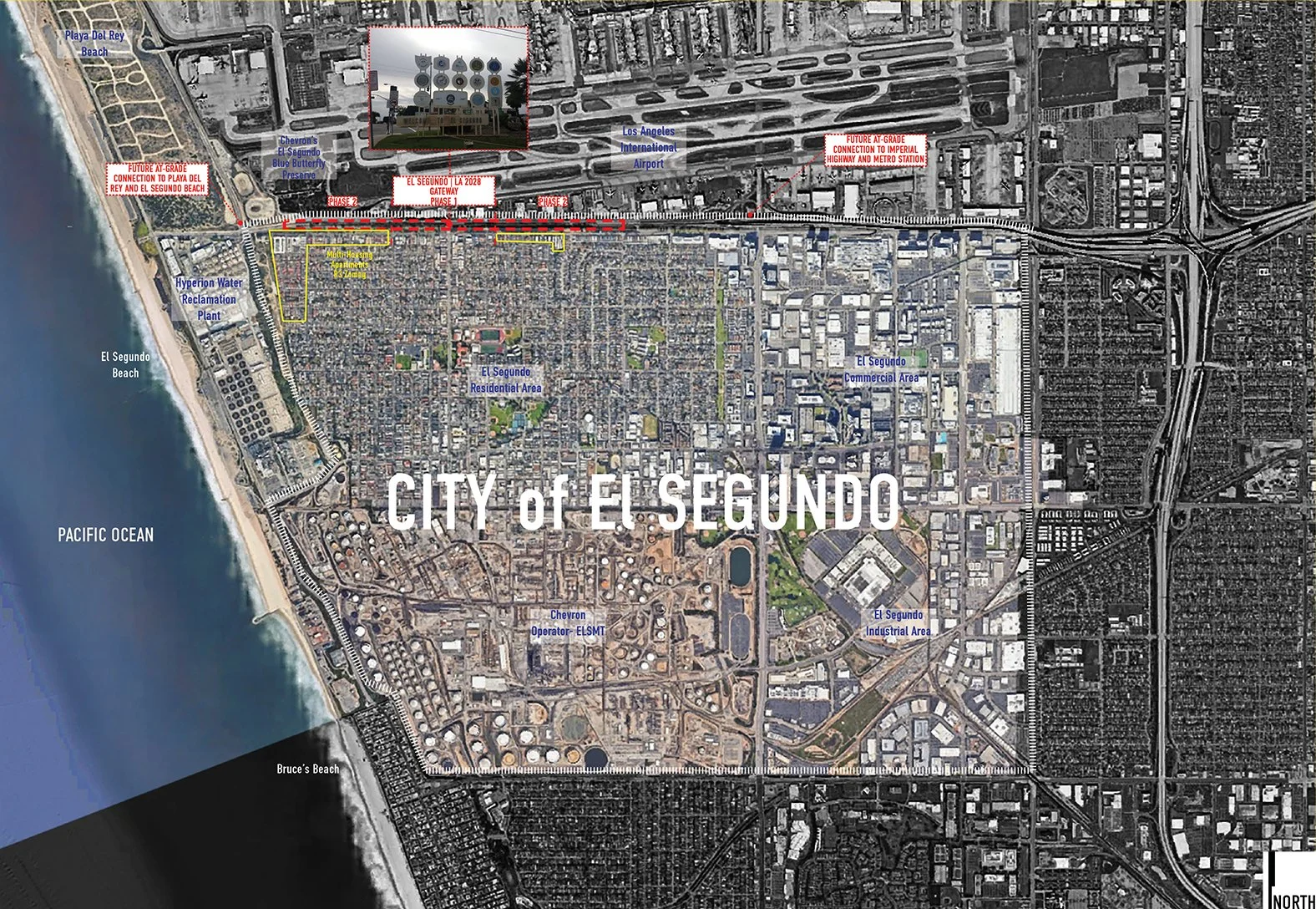
El Segundo, California
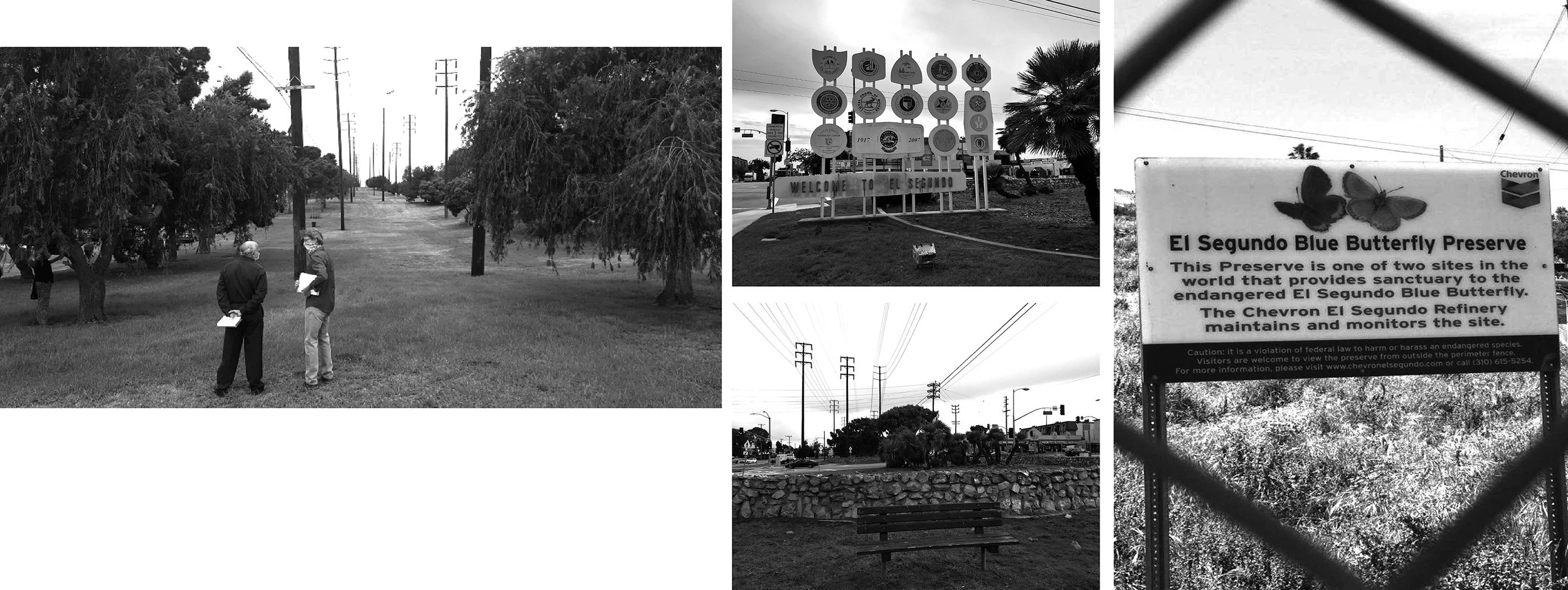
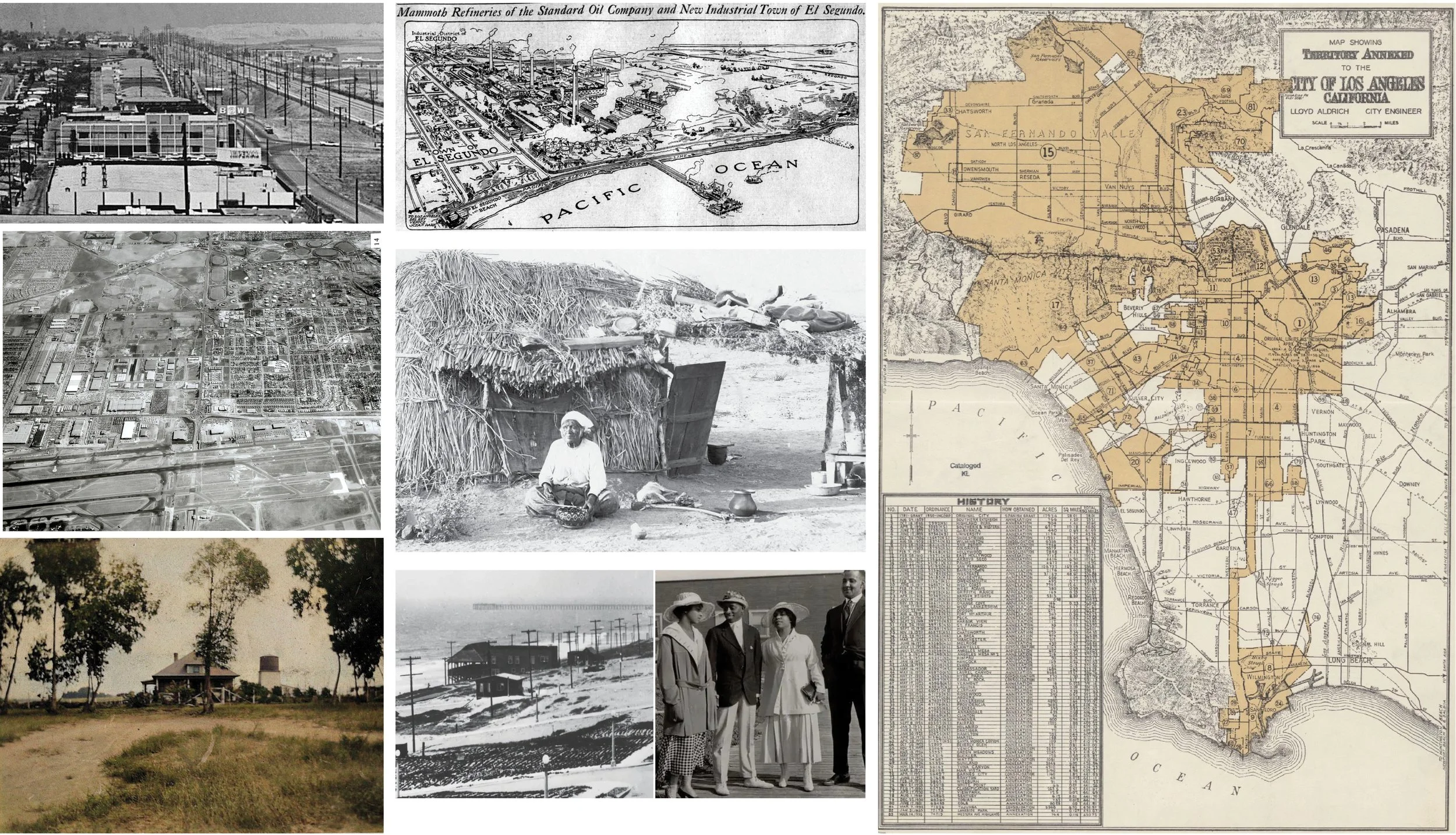
Historical Context of Main Street and Imperial Highway - Gateway to El Segundo.
“Open spaces... The welcome wagons...thatʼs what we love about El Segundo. Now it is the heart of one of the business capital centers of the world...” - 1997 El Segundo TV “Short History of El Segundo”
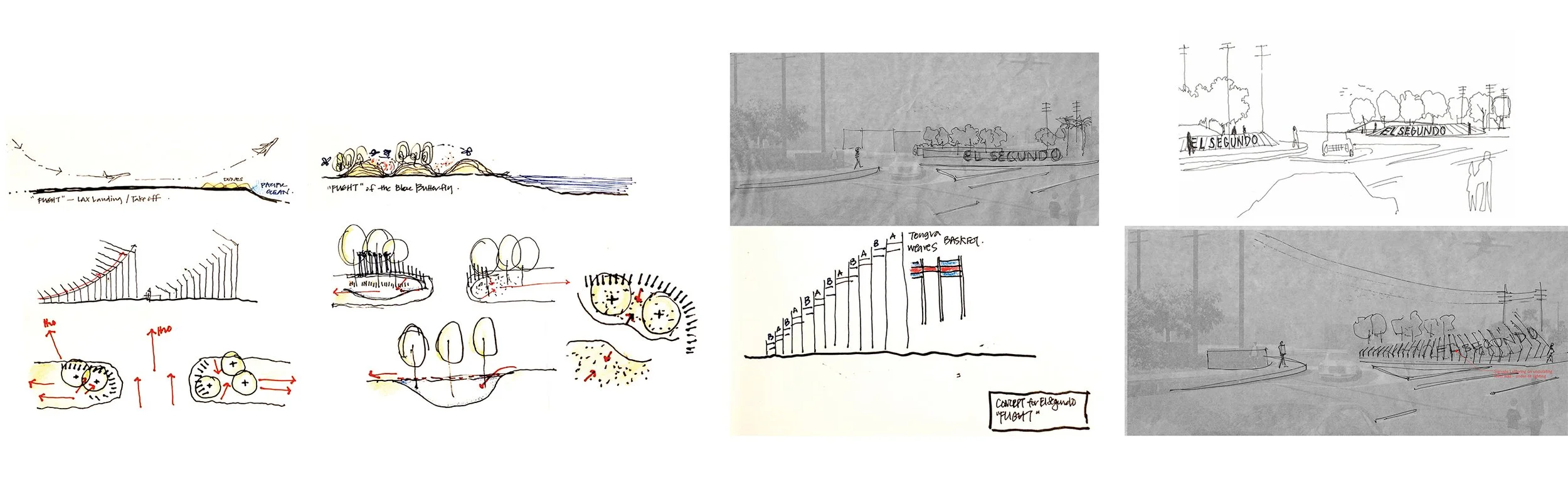
Phase One: Conceptual Design

Ariel view towards the gateway from LAX, heading west towards the Pacific Ocean.
Phase Two: Schematic Design + Design Development
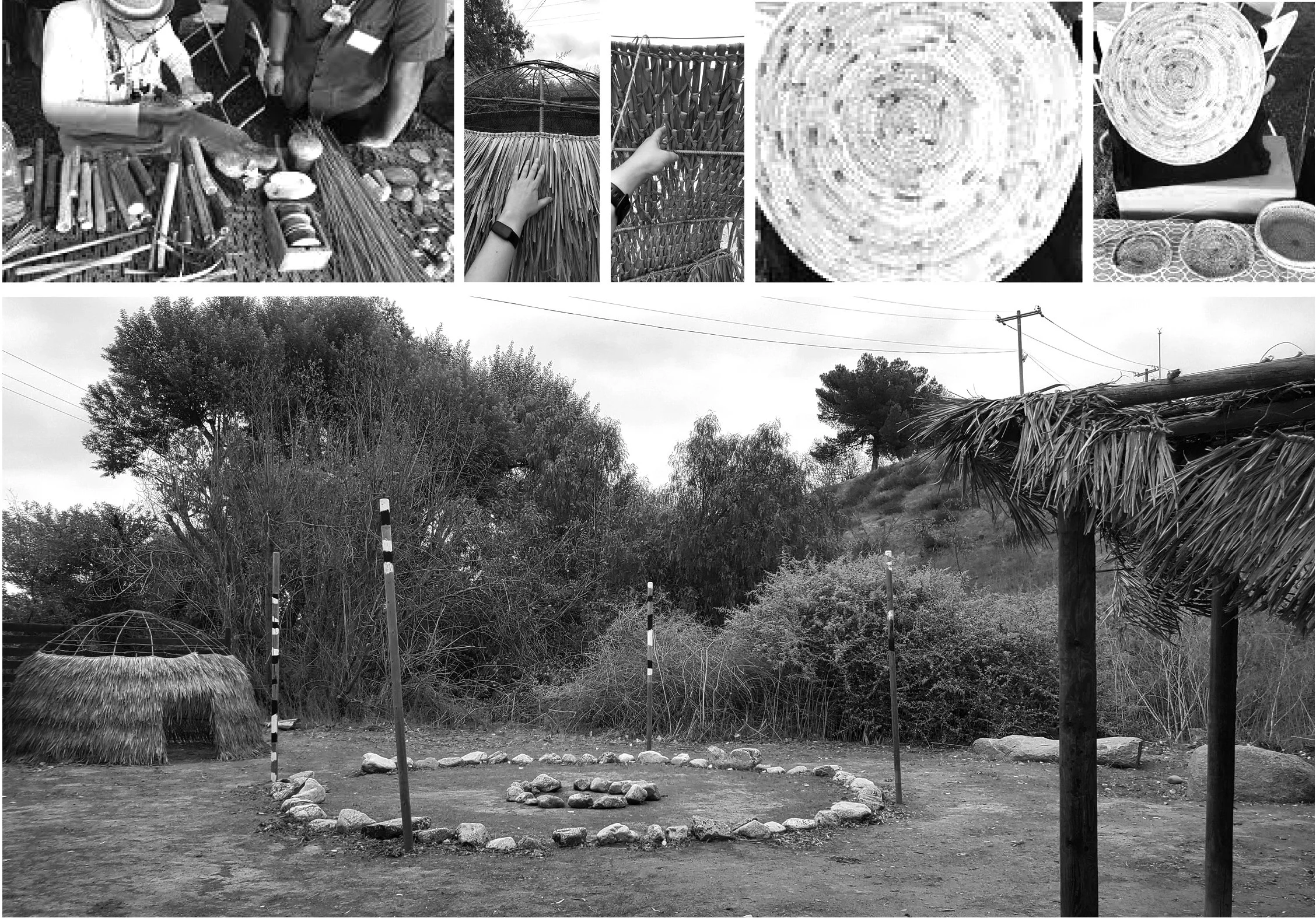
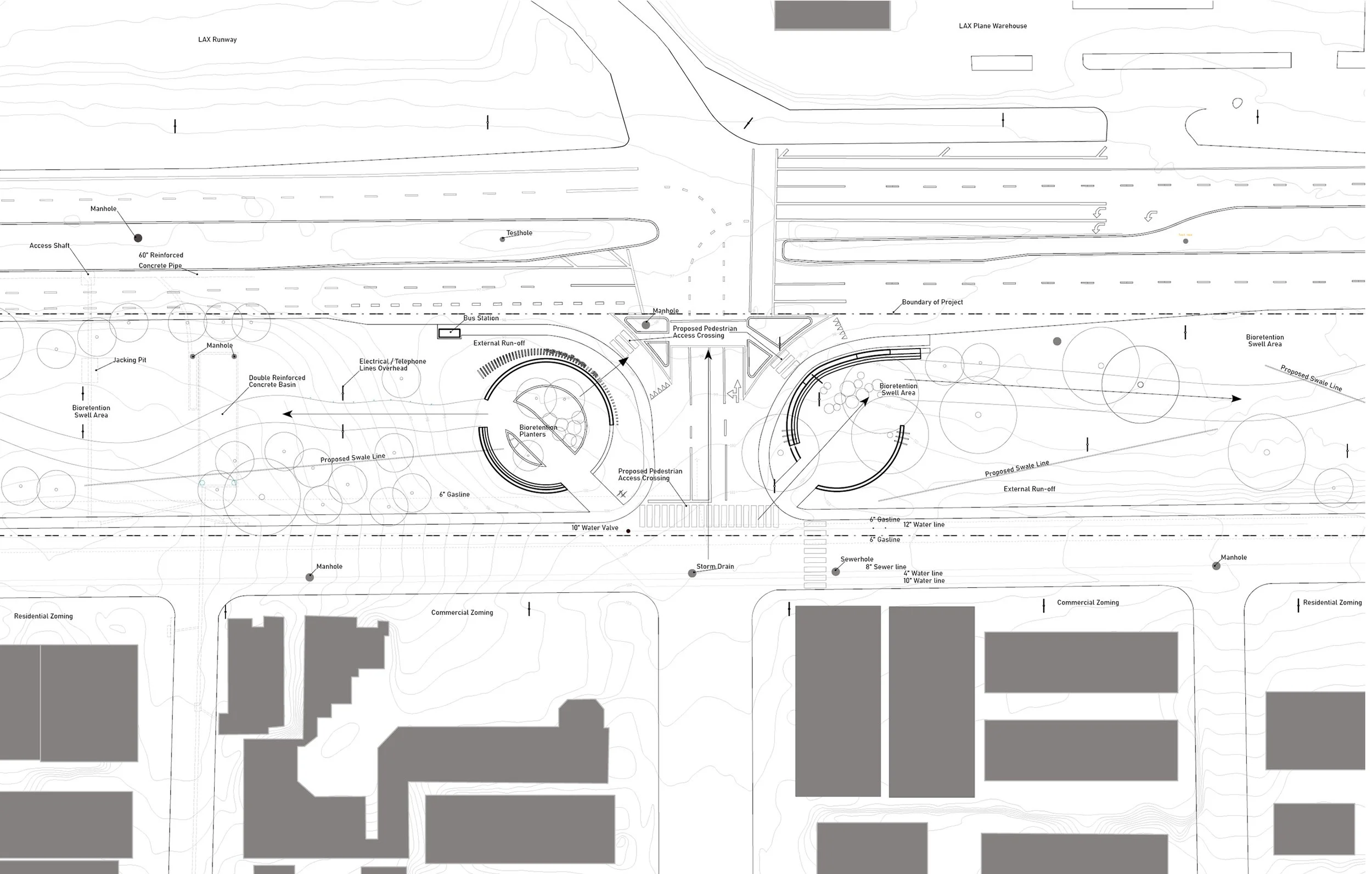
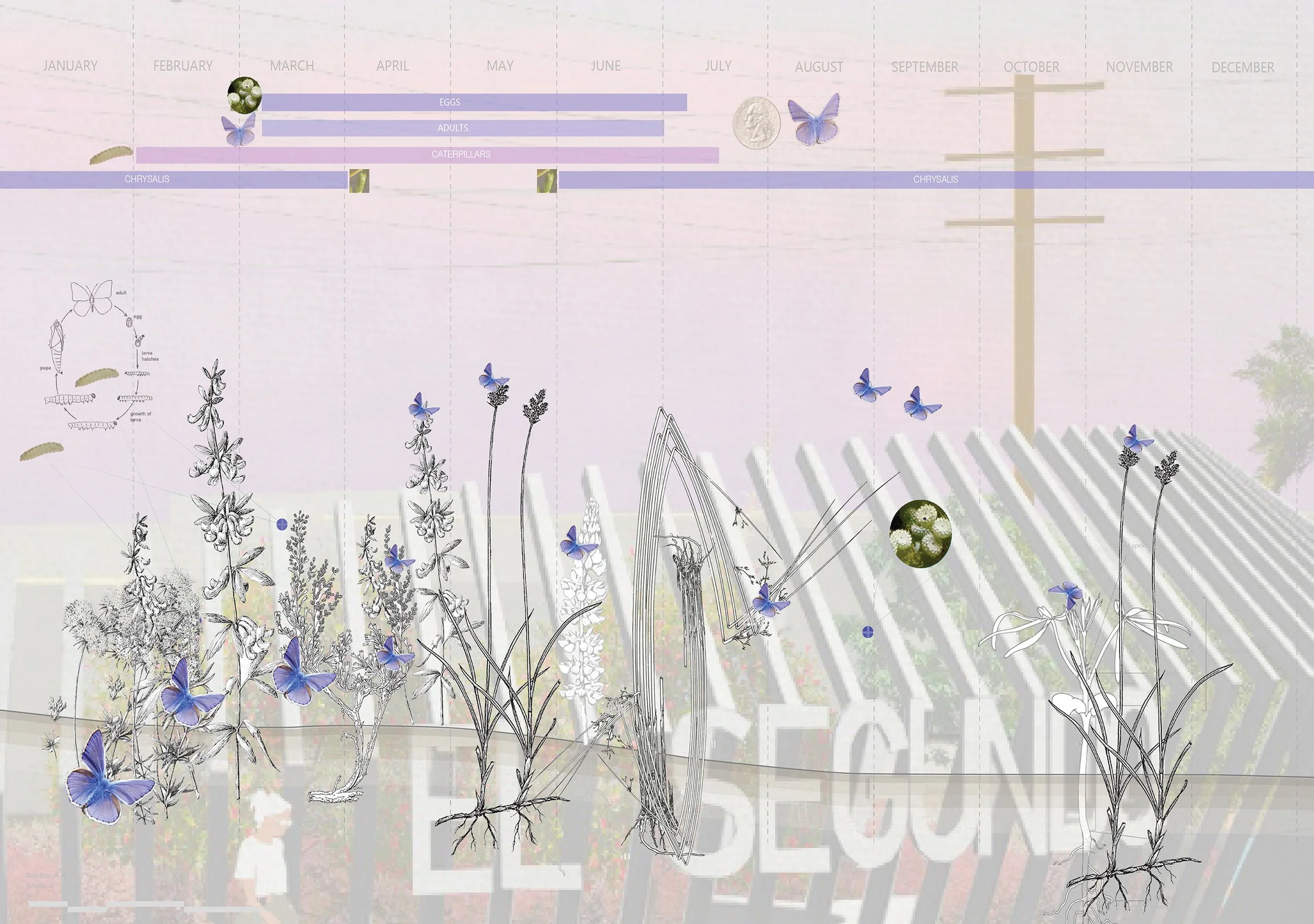
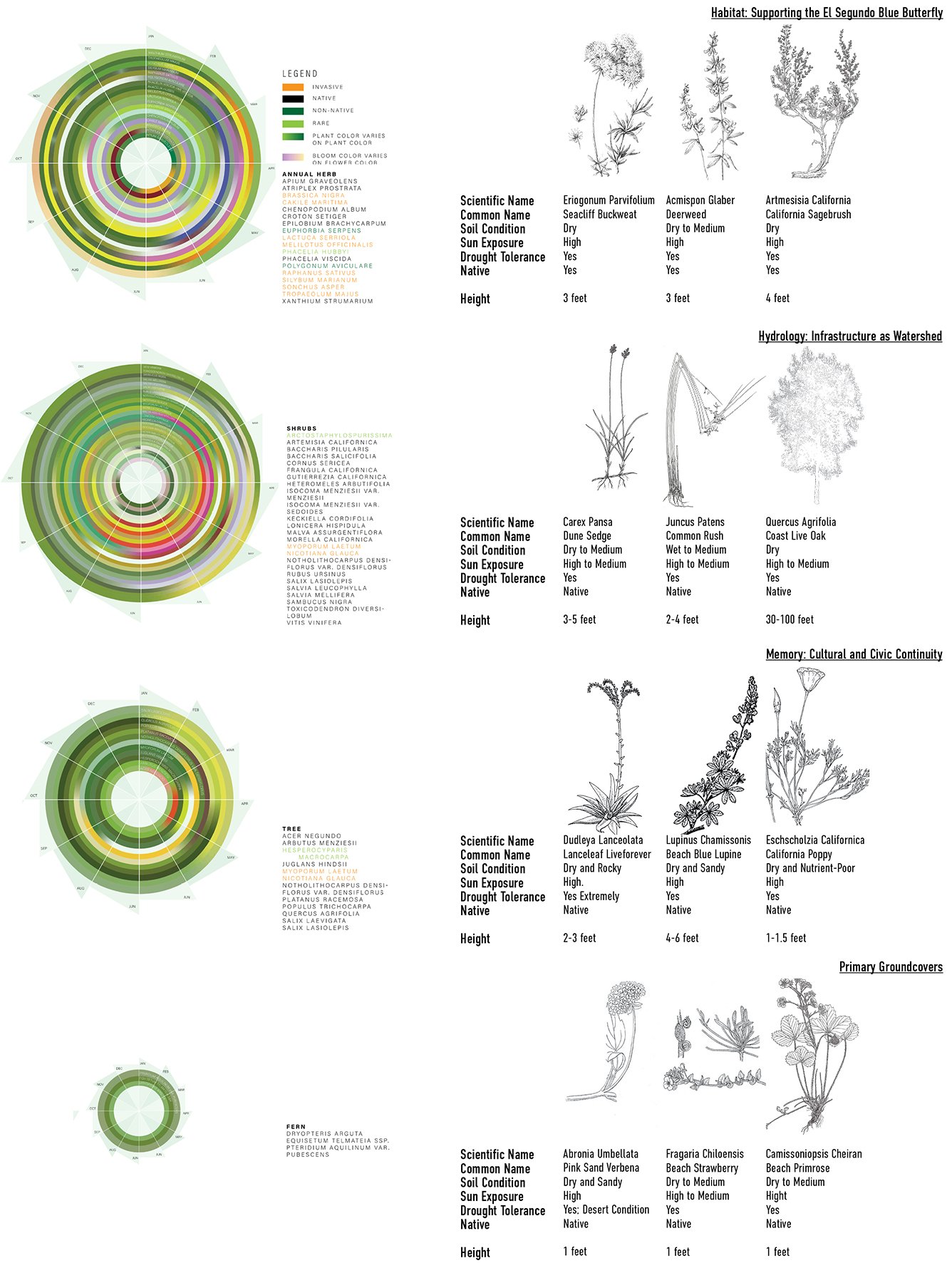
Schematic Design: Restoration is grounded in the material and cultural conditions of this site: Tongva land practices, refinery and airport impacts, and the fragmented habitat of the El Segundo Blue Butterfly. Restoration here is procedural rather than symbolic, oriented toward reactivating interrupted ecological relations. The native Tongva’s understood material and shapes and rendering of existing conditions and understanding into the schematic design process.
Landlocked at one of the prominent spaces of Southern California, El Segundo is one of the main cities that one witnesses upon their arrival to LA.
Project Description
LA28 Olympic Gateway | El Segundo Gateway
Infrastructure as Collective Sanctuary
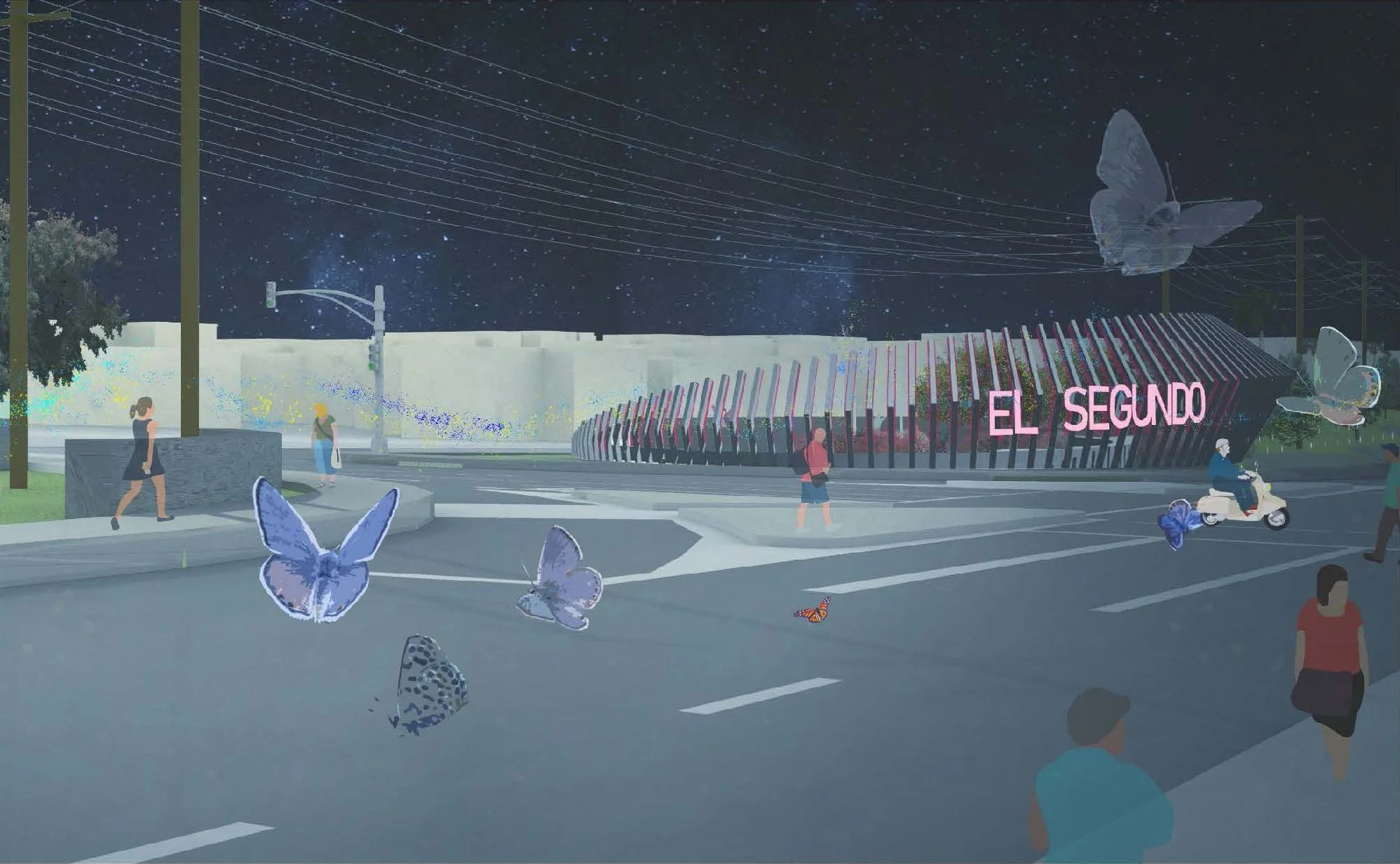
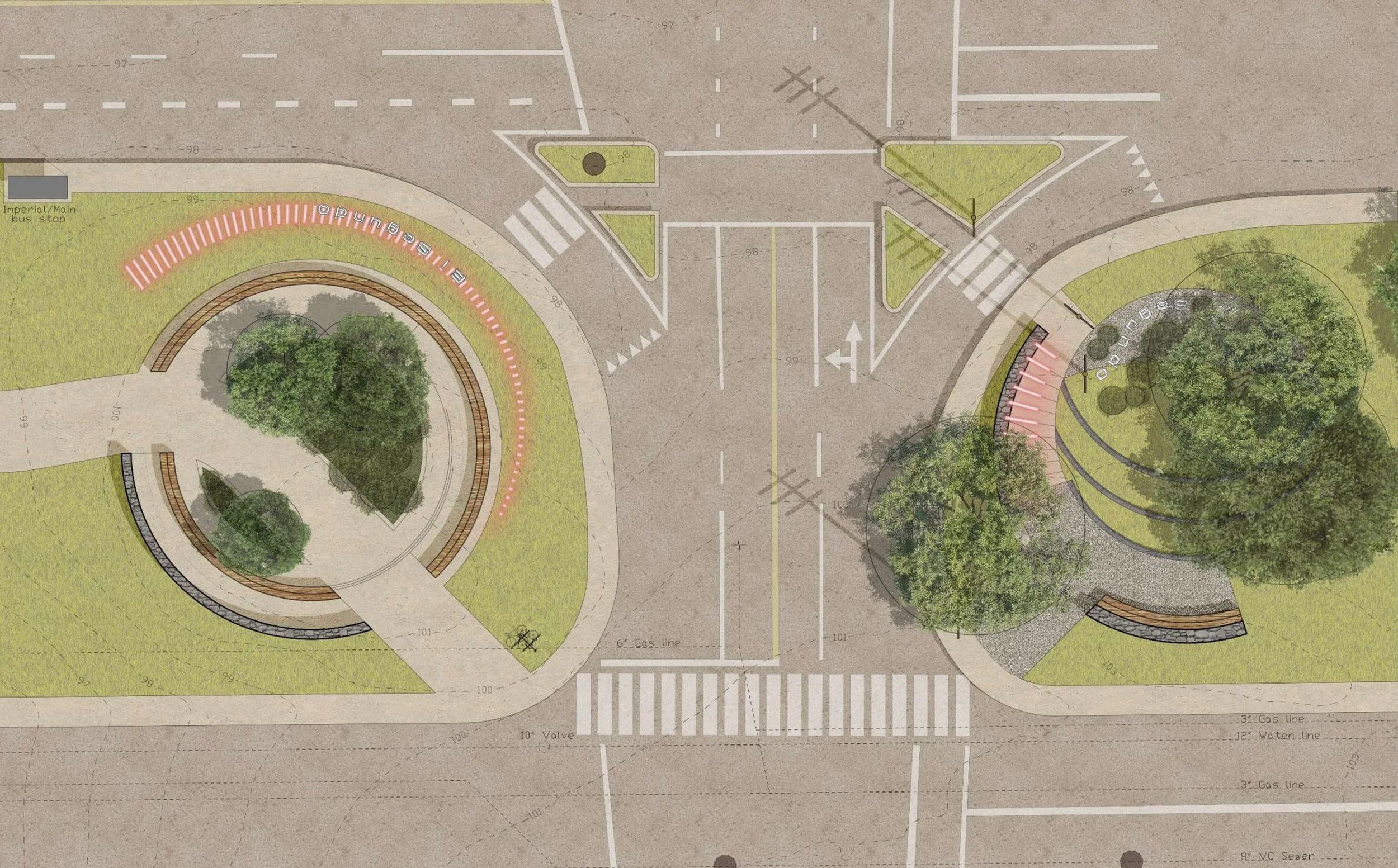
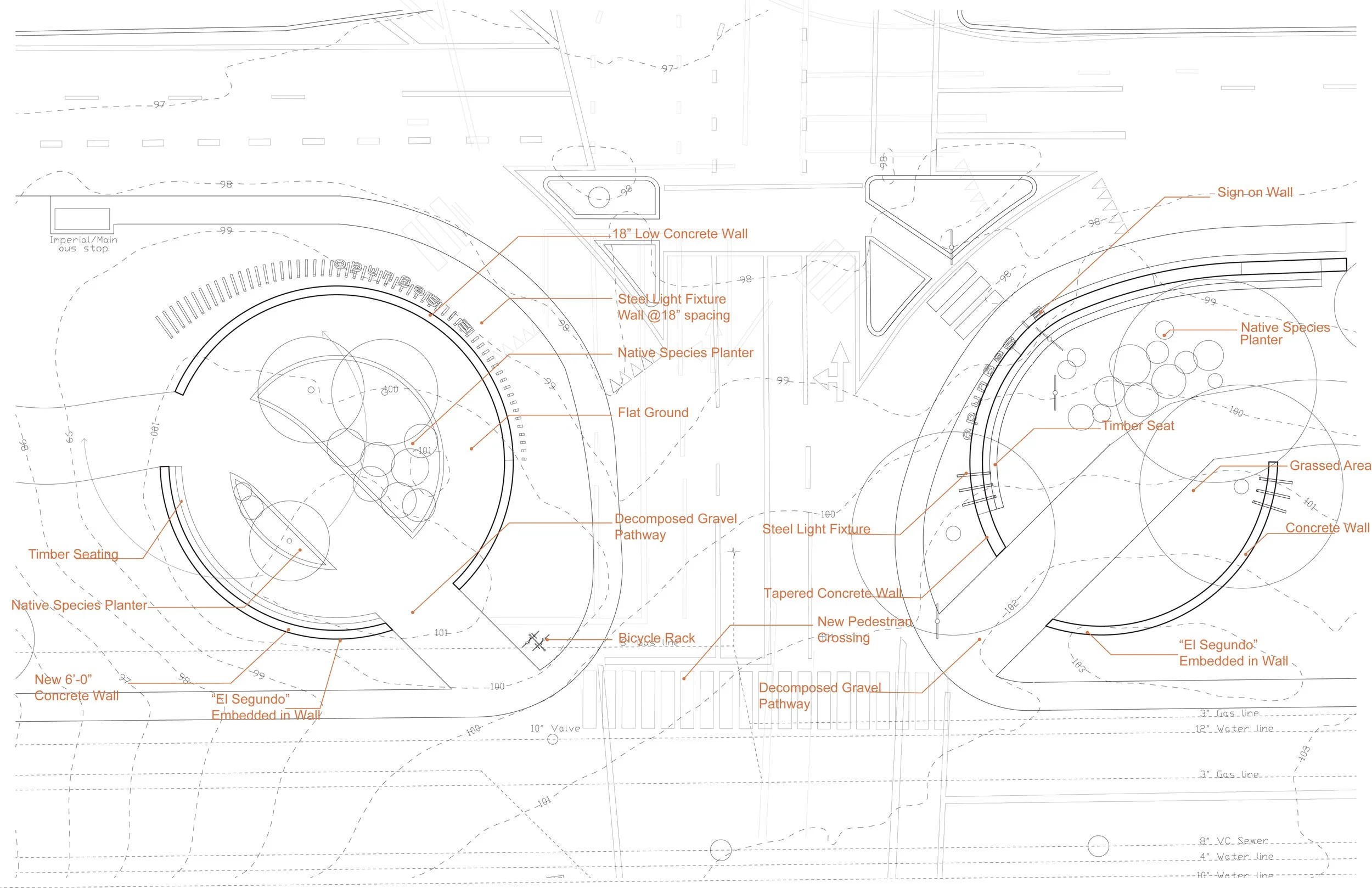
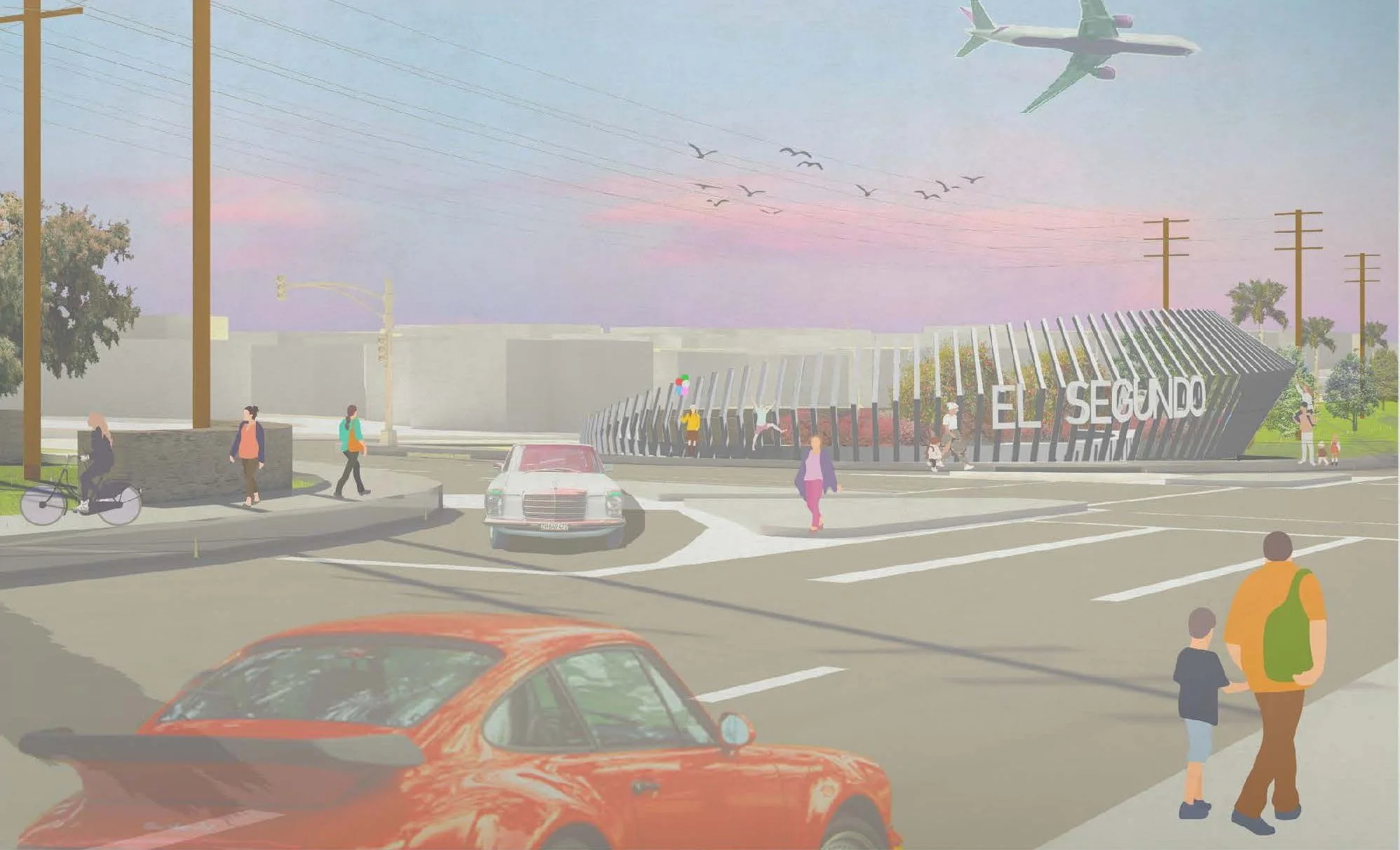
The El Segundo Gateway repositions infrastructure as a collective sanctuary at the scale of the city—a threshold condition where arrival, identity, and environment converge. Located along the LAX corridor, the project transforms a site of transit into a spatial system that mediates between movement and belonging. Rather than a singular object, the gateway is conceived as a field condition—a series of (recycled) structural hollow columns from nearby demolished LAX terminals formulate into walls that extend as the “arms” of the city, constructing space through continuity, repetition, and orientation. These geometries organize arrival as a collective experience, guiding movement while framing moments of pause, reflection, and encounter.
The project operates through a fluid spatial logic, where circulation, landscape, and form are integrated into a continuous system. Inspired by cycles of growth and transformation, the geometry resists fixed hierarchy, allowing the gateway to be read not as monument, but as an evolving framework shaped by use, time, and environmental forces. At the scale of infrastructure, the work engages questions of ownership and representation: how a city defines itself at its edge, and how public space can move beyond symbolic identity toward shared spatial agency. The gateway becomes a site where community, ecology, and mobility intersect—reframing wayfinding as a cultural and collective act.
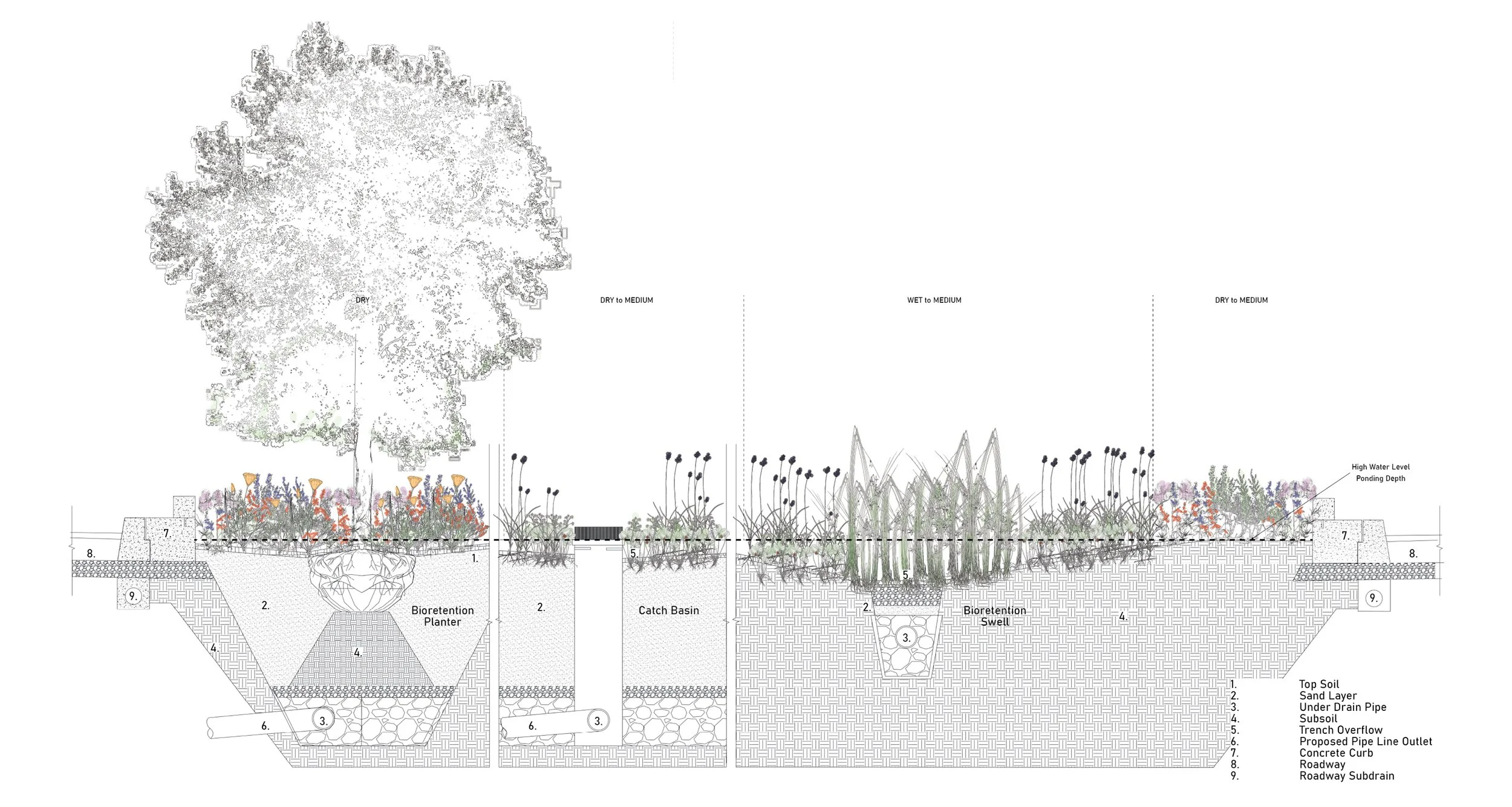
Materially and spatially, the project aligns environmental performance with civic experience, integrating circular economy, rewilding landscape, light, and movement into a unified system. The result is not an object of arrival, but a constructed condition of belonging—an infrastructure that supports how a city is entered, perceived, and collectively inhabited.
This project explores architecture as infrastructure—shaping collective experience at the scale of territory.
Project Team:
Collaborators:
Consultants:
Publication: The Plan Journal