MIIM: things we like

MIT's James Wescoat partners in Pakistan on a critical issue: Water /  by Studio MIIM

Irrigated plains of the Punjab province in Pakistan, viewed from a Mughal tower in Sheikhpura Distric

The historic gardens of the Mughal Empire in India and Pakistan first drew James Wescoat to the Indus Basin four decades ago. A landscape architect and professor in the Aga Khan Program for Islamic Architecture in the MIT Department of Architecture, Wescoat has returned to the region many times for research that spans studies of 17th-century waterworks and 21st-century water systems, policy analyses, and multilateral water agreements.

His partners in Pakistan include the new Centre for Water Informatics and Technology (WIT) of the Lahore University of Management Sciences (LUMS). “WIT has devised innovative canal management and data transmission technologies that monitor water flows precisely and in real time,” says Wescoat, who chairs the WIT Advisory Group. “WIT’s pioneering systems can revolutionize water management.”

Read a profile of Wescoat at MIT News.


How To Get Creative /  by Studio MIIM

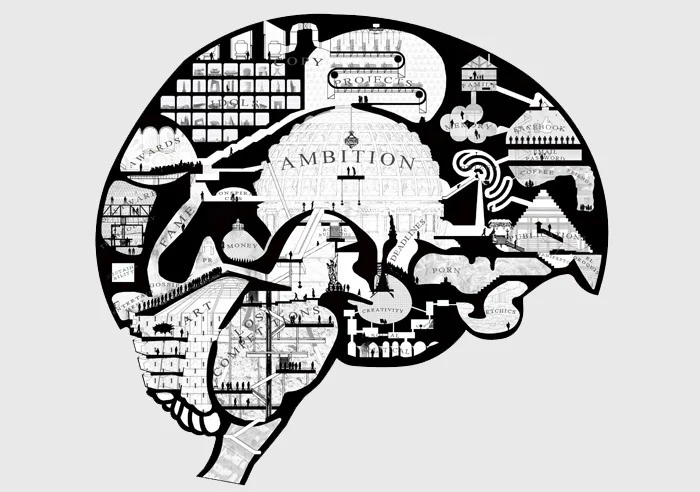
‘In pre-modern epochs, renewal of practice was always initiated by looking backwards, as a return to the fundamentals. The cult of the new/young first came with modernity. Are young offices still obsessed with the ideas of idols, former employers an…

‘In pre-modern epochs, renewal of practice was always initiated by looking backwards, as a return to the fundamentals. The cult of the new/young first came with modernity. Are young offices still obsessed with the ideas of idols, former employers and teachers? Or are young practices in architecture today considered to be especially innovative? Are they generating new knowledge or just recycling winning formulas? If truly innovative new practices still exist, from what fields of knowledge do they get their input?’ Conditions Issue #9, New Knowledge – New Practices?
 

status: commissioned by Conditions magazine

team: Konstantinos Pantazis, Marianna Rentzou, Lida Stamou

collaborator: Joana Sá Lima

year: 2011


By Gregory Ciotti

When it comes to doing creative work, it’s important to not only look for ways to let our creativity thrive, but to also be mindful of insidious “creativity killers” that can sneak up and strangle our ability to come up with our best ideas. According to research from Harvard University, there are five main culprits that are responsible for killing our creativity.

It’s important to recognize these impediments to the creative thought process because many are insidious, and worse yet, most can be made on the managerial end, meaning we may be stifling our creative workers without even realizing it. For those of us doingcreative work, we must be mindful of these deterrents of the creative process so we can continue to put out our most novel ideas.

1. Role Mismatch

As Einstein said, “Everybody is a genius. But if you judge a fish by its ability to climb a tree, it will live its whole life believing that it is stupid.” Placing people in roles that they are not fit for is a surefire way to kill creativity. Although this may seem like a managerial concern, there are personal consequences here as well. Additional research has shown that we are at our best when we are “busy” (and pushed to our limits), but not rushed. In the wrong role, we can struggle to keep up and live in a constant state of creativity-crushing panic.

2. External End-Goal Restriction

Although self-restriction can often boost creativity, the Harvard study shows thatexternal restrictions are almost always a bad thing for creative thinking. This includes subtle language use that deters creativity, such as bosses claiming “We do things by the book around here,” or group members implicitly communicating that new ideas are not welcome.

3. Strict Ration of Resources

While money and physical resources are important to creativity, the Harvard study revealed that mental resources were most important, including having enough time. Creative people re-conceptualize problems more often than a non-creative. This means they look at a variety of solutions from a number of different angles, and this extensive observation of a project requires time. This is one of the many reasons you should do your best to avoid unnecessary near-deadline work that requires novel thinking. Also, when we are faced with too many external restrictions we spend more time acquiring more resources than actually, you know, creating.

4. Lack of Social Diversity

Homogeneous groups have shown to be better able to get along, but it comes at a cost: they are less creative. This even applies to the social groups you keep, so beware of being surrounded by people who are too similar all the time, you may end up in a creative echo-chamber.

5. Discouragement/No Positive Feedback

It’s tough to continue working on novel ideas when you haven’t received any positive feedback. This feeling is backed by psychological research that shows people who’ve started a new undertaking are most likely to give up the first time things come crashing down, also known at the “what the hell!” effect. Creative people thrive on having others impacted by their ideas. Without feedback, their motivation begins to wither and die. — How about you? What kills your creativity?

 via 99U

FORUM ON EUROPEAN CULTURE An initiative by DutchCulture & De Balie /  by Studio MIIM

Rem Koolhaus OMA MIIM Designs

What is Europe? This question can be answered in countless variations on the theme. Rem Koolhaas and Luuk van Middelaar will go in search of the answer within the brackets of 12 hours, hoping to find it in nonstop conversations with impressive guests from the worlds of art, philosophy, and politics. What does Europe mean to them? Is there such a thing as European culture and identity to begin with, and if so, what should define it?

Get TICKET HERE

Architectural Review - Typology: Multifaith /  by Studio MIIM

MIT Chapel MIIM Designs

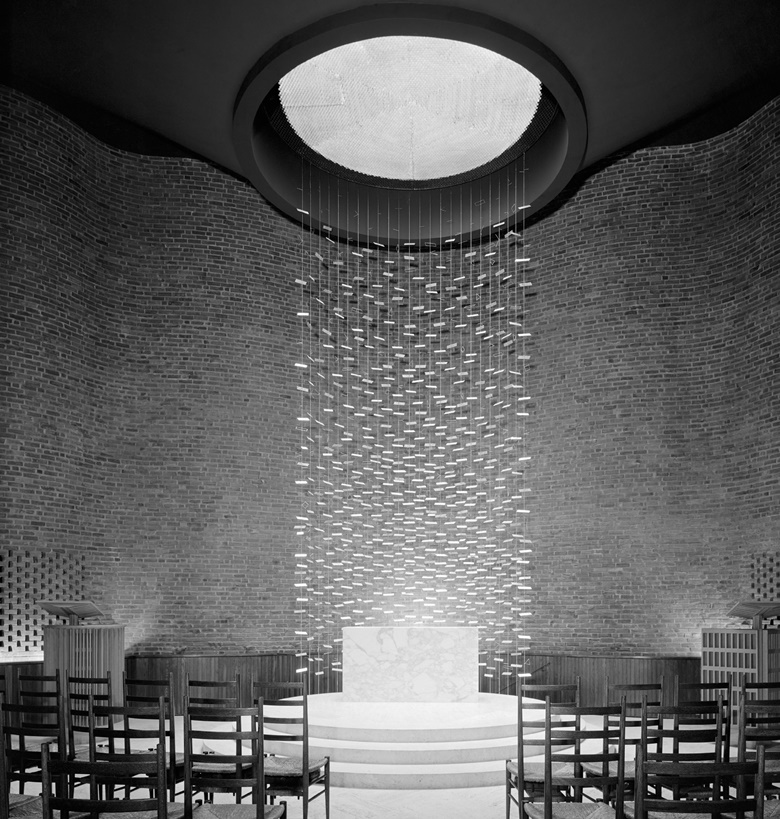
In the most recent Architectural Review magazine, Tom Wilkinson is History Editor of The Architectural Review and the author of “Bricks and Mortals: Ten Great Buildings and the People They Made”, investigates some of the questions that we have been researching at MIIM Designs:


‘What defines a place of worship?

Does it have to be sacrosanct?

Must it display certain signs?

Or is it enough that it feels ‘spiritual’?’


In AD631 (or AH 10) a delegation of Christians from Najran, in present-day Yemen, arrived in Medina to negotiate a treaty with Muhammad. He received the Najrans in the mosque and, although they were unable to agree on certain doctrinal matters, invited them to pray there nonetheless, which they did – facing east.

This episode demonstrates some of the possibilities – and the problems – inherent in the idea of adherents of different faiths sharing spaces of worship. First, there is often no intrinsic impediment to taking the occasional dip. Muslims can pray anywhere, as can Christians, although Mass should only be celebrated on consecrated ground (according to Canon 933, churches of other denominations may only be used in extraordinary circumstances). Catholics aside, Christian worship is now more likely to take place in a light industrial unit or megachurch than in a cruciform building, basilica, rotunda, or any of the other forms that have been developed and disputed across the centuries. As for architectural objections to shacking up on a more permanent basis, despite there being great regional traditions in mosque design, there is no essential mosque-form. As the above list demonstrates, the same can be said for Christian churches.

Read More HERE

METROPOLIS: Pritzker Laureates: We Must Rescue the Role of the Architect /  by Studio MIIM

Pritzker Architecture MIIM Designs Architecture

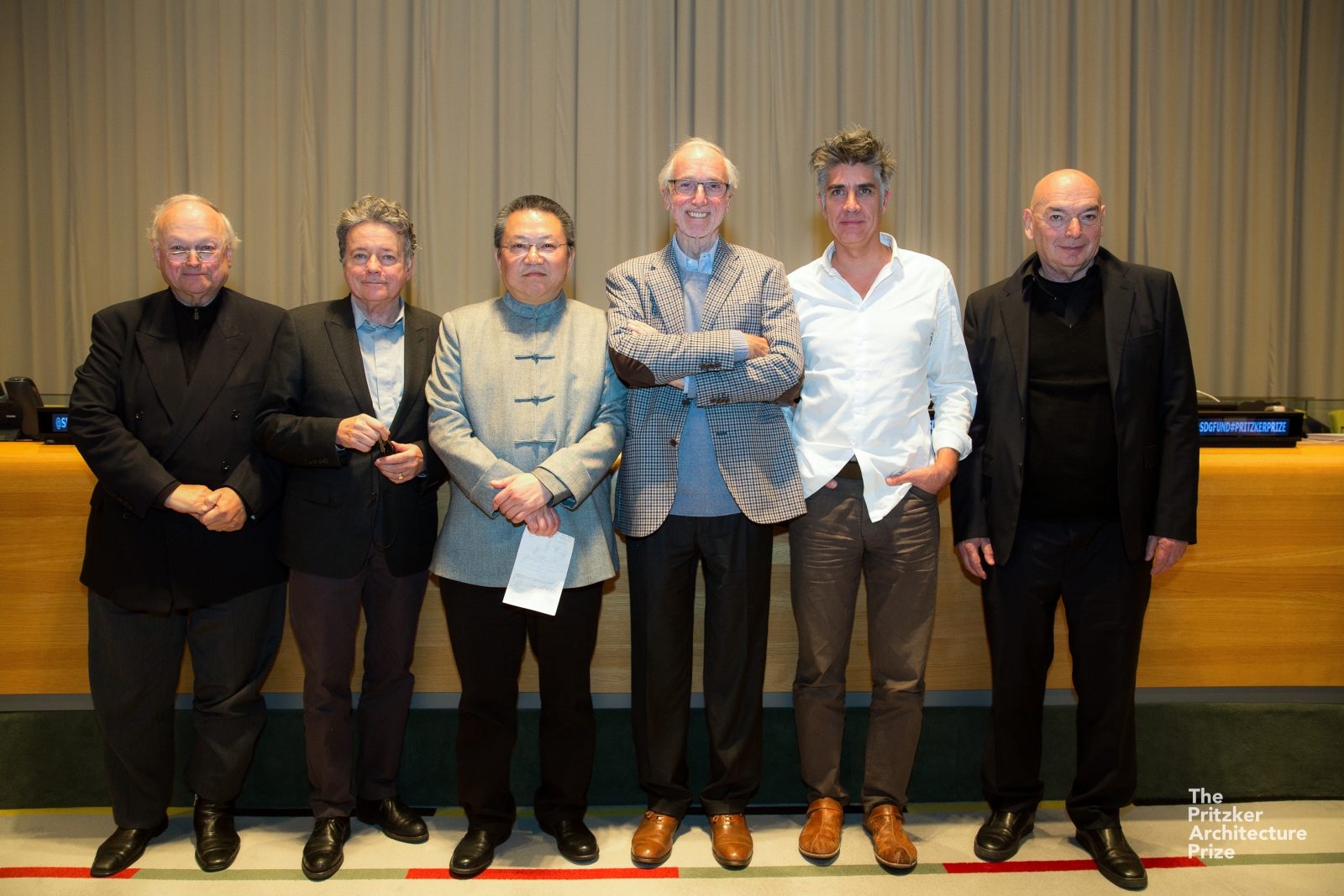
On Tuesday night, seven Pritzker Prize laureates—Richard Rogers, Glenn Murcutt, Christian de Portzamparc, Wang Shu, Renzo Piano, Jean Nouvel, and the newest among the group, Alejandro Aravena—gathered at the United Nations headquarters in New York to discuss what they thought to be the greatest challenge facing the built environment.


Australian architect and 2002 laureate Glenn Murcutt chose not to discuss sustainability, which he has spent his career championing, and instead delivered a rousing, emotional speech about a project that has occupied his mind for the better part of a decade: the Newport Mosque. The mosque has been the source of much controversy in Victoria, Australia, where it will be built. "The real issue," said Murcutt about the public discontent surrounding the project, "is fear"—fear of the unfamiliar that underpins social and religious prejudice around the world. 

Read More HERE