MIIM Designs

Tackling Built Environment Challenges With Participatory Design #iOpenArchitecture /  by Studio MIIM

MIIM Designs Participatory Design Thinking

Currently, 3.5 billion people are living in cities, while the rest are residing in the countryside. However, by the year 2050, over 75% of the world’s population will be residing in cities1. This growth does not come without challenges. Lack of resources, natural disasters, and political and economical circumstances are obstacles that prevent the majority of the world’s population from finding a livable place to reside. Design and architecture are to play a critical role in overcoming these challenges which grow increasingly complex due to (1) Global Warming (2) Gentrification and Segregation (3) Migration and Refugee Crises and (4) Inadequate Farming. The role that Public Interest Design, and more specifically, the Open Architecture Collaborative will play is to tackle these challenges within our built environment before the goal of creating livable spaces for everyone becomes tougher to achieve.

The purpose of design is to understand the challenges. We start by allowing the community to take on a participatory role in elucidating the challenges that arise within their neighborhoods and offering solutions. We ask, what can we learn from the communities to improve their living conditions? It can be as simple as contributing to sustainable design solutions – what is the right amount of light, airflow and natural ventilation to keep homes a steady temperature year round. It can also be complex. How can design respond more quickly and effectively in times of natural disaster? How can design become preventative, yet, still be one with the Earth? The questions do not stop there, nor are these necessarily the “right” questions. Every project has its own set of challenges and the designer must discover the right questions for each one. Moreover, given the resources at hand, s/he must also coordinate the best use of local materials, traditional crafting methods and also figure out how to build with recycled materials.

Read More on Open Architecture Collaborative
 

Being 3 Years Old Again… /  by Studio MIIM

How CMOM Can Bring Your Inner Child Out, Too.

When Wall Street Journalist, Ralph Gardner Jr., visited our exhibition design, he stated:

“There are few occasions when I wish I was 3 years old. But I did during a visit to the Children’s Museum of Manhattan’s new exhibit called ‘America to Zanzibar: Muslim Cultures Near and Far.’” He wasn’t the only one that got to be 3 years old this past week. Many politicians stopped by this past week to play.

Presidential candidate, Hillary R. Clinton, decided to experience what Gardner was talking about herself. Clinton spoke to New Yorkers at the center of the chahar bagh – the square garden – following the custom of community leaders in past Muslim societies. Many people from the community, who all wanted to be 3 years old again, came to as well. They all learned about sharing, love, and respect.
 Before having to leave, Clinton stopped by to write her wish on the "drops of hope" paper.
So, the only question we have for Hillary is: what was her wish for the wishing fountain?

Hillary Clinton CMOM MIIM Designs

A couple of days later, several of Clinton's childhood friends came to learn about sharing, love, and respect . New York City Council Speaker Melissa Mark-Viverito and Council Members Helen Rosenthal, Jimmy Van Bramer, and I. Daneek Miller, all stopped by to play at the Children’s Museum’s America to Zanzibar: Muslim Cultures Near and Far exhibit today. They even learned the importance of cooperation and team. They set off to make a song together with tanbour, tabla, and sitar. Rumor has it that they might even start a new band soon. Wonder if we will get to hear their new album?

Hillary Clinton CMOM MIIM Designs

As Huffington Post Islamic Studies Scholar Rose Deighton wrote:

 “Today more than ever, it is of immense importance that we begin to appreciate the complexity and great differences that exist within Muslim societies. [This exhibit] … is a timely contribution to our collective experience of the Islamic world and an important reminder of the diversity here at home among American Muslims.”

More on the MIIM Designs CMOM Exhibit


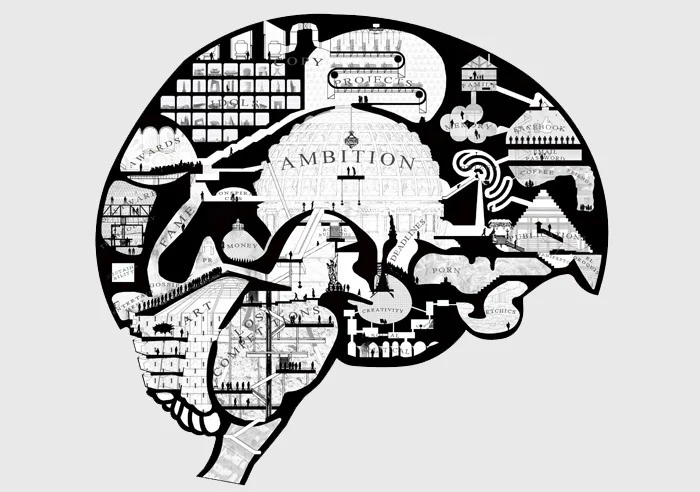
How To Get Creative /  by Studio MIIM

‘In pre-modern epochs, renewal of practice was always initiated by looking backwards, as a return to the fundamentals. The cult of the new/young first came with modernity. Are young offices still obsessed with the ideas of idols, former employers an…

‘In pre-modern epochs, renewal of practice was always initiated by looking backwards, as a return to the fundamentals. The cult of the new/young first came with modernity. Are young offices still obsessed with the ideas of idols, former employers and teachers? Or are young practices in architecture today considered to be especially innovative? Are they generating new knowledge or just recycling winning formulas? If truly innovative new practices still exist, from what fields of knowledge do they get their input?’ Conditions Issue #9, New Knowledge – New Practices?
 

status: commissioned by Conditions magazine

team: Konstantinos Pantazis, Marianna Rentzou, Lida Stamou

collaborator: Joana Sá Lima

year: 2011


By Gregory Ciotti

When it comes to doing creative work, it’s important to not only look for ways to let our creativity thrive, but to also be mindful of insidious “creativity killers” that can sneak up and strangle our ability to come up with our best ideas. According to research from Harvard University, there are five main culprits that are responsible for killing our creativity.

It’s important to recognize these impediments to the creative thought process because many are insidious, and worse yet, most can be made on the managerial end, meaning we may be stifling our creative workers without even realizing it. For those of us doingcreative work, we must be mindful of these deterrents of the creative process so we can continue to put out our most novel ideas.

1. Role Mismatch

As Einstein said, “Everybody is a genius. But if you judge a fish by its ability to climb a tree, it will live its whole life believing that it is stupid.” Placing people in roles that they are not fit for is a surefire way to kill creativity. Although this may seem like a managerial concern, there are personal consequences here as well. Additional research has shown that we are at our best when we are “busy” (and pushed to our limits), but not rushed. In the wrong role, we can struggle to keep up and live in a constant state of creativity-crushing panic.

2. External End-Goal Restriction

Although self-restriction can often boost creativity, the Harvard study shows thatexternal restrictions are almost always a bad thing for creative thinking. This includes subtle language use that deters creativity, such as bosses claiming “We do things by the book around here,” or group members implicitly communicating that new ideas are not welcome.

3. Strict Ration of Resources

While money and physical resources are important to creativity, the Harvard study revealed that mental resources were most important, including having enough time. Creative people re-conceptualize problems more often than a non-creative. This means they look at a variety of solutions from a number of different angles, and this extensive observation of a project requires time. This is one of the many reasons you should do your best to avoid unnecessary near-deadline work that requires novel thinking. Also, when we are faced with too many external restrictions we spend more time acquiring more resources than actually, you know, creating.

4. Lack of Social Diversity

Homogeneous groups have shown to be better able to get along, but it comes at a cost: they are less creative. This even applies to the social groups you keep, so beware of being surrounded by people who are too similar all the time, you may end up in a creative echo-chamber.

5. Discouragement/No Positive Feedback

It’s tough to continue working on novel ideas when you haven’t received any positive feedback. This feeling is backed by psychological research that shows people who’ve started a new undertaking are most likely to give up the first time things come crashing down, also known at the “what the hell!” effect. Creative people thrive on having others impacted by their ideas. Without feedback, their motivation begins to wither and die. — How about you? What kills your creativity?

 via 99U

Architectural Review - Typology: Multifaith /  by Studio MIIM

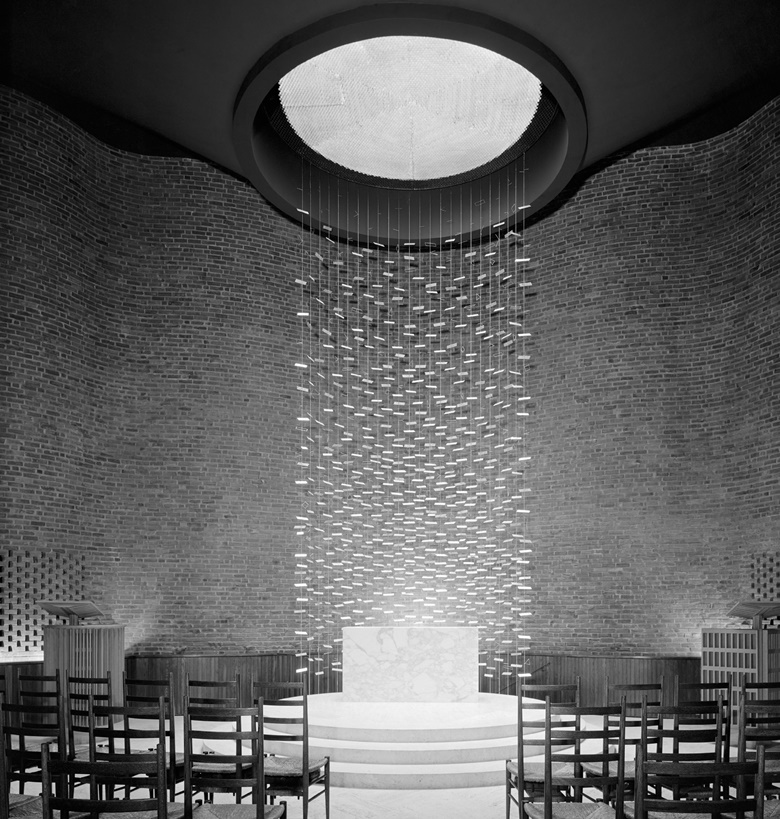
MIT Chapel MIIM Designs

In the most recent Architectural Review magazine, Tom Wilkinson is History Editor of The Architectural Review and the author of “Bricks and Mortals: Ten Great Buildings and the People They Made”, investigates some of the questions that we have been researching at MIIM Designs:


‘What defines a place of worship?

Does it have to be sacrosanct?

Must it display certain signs?

Or is it enough that it feels ‘spiritual’?’


In AD631 (or AH 10) a delegation of Christians from Najran, in present-day Yemen, arrived in Medina to negotiate a treaty with Muhammad. He received the Najrans in the mosque and, although they were unable to agree on certain doctrinal matters, invited them to pray there nonetheless, which they did – facing east.

This episode demonstrates some of the possibilities – and the problems – inherent in the idea of adherents of different faiths sharing spaces of worship. First, there is often no intrinsic impediment to taking the occasional dip. Muslims can pray anywhere, as can Christians, although Mass should only be celebrated on consecrated ground (according to Canon 933, churches of other denominations may only be used in extraordinary circumstances). Catholics aside, Christian worship is now more likely to take place in a light industrial unit or megachurch than in a cruciform building, basilica, rotunda, or any of the other forms that have been developed and disputed across the centuries. As for architectural objections to shacking up on a more permanent basis, despite there being great regional traditions in mosque design, there is no essential mosque-form. As the above list demonstrates, the same can be said for Christian churches.

Read More HERE

Maryam writes about Fast Fashion buildings /  by Studio MIIM

STRINGER/BANGLADESH/REUTERSRescue workers attempt to rescue garment workers from the rubble of the collapsed Rana Plaza building, in Savar, 30 km (19 miles) outside Dhaka April 28, 2013. Fire broke out on Sunday in a garment factory that collapsed i…

STRINGER/BANGLADESH/REUTERS

Rescue workers attempt to rescue garment workers from the rubble of the collapsed Rana Plaza building, in Savar, 30 km (19 miles) outside Dhaka April 28, 2013. Fire broke out on Sunday in a garment factory that collapsed in the Bangladeshi capital, complicating attempts to find any survivors of a disaster that has killed 377 people

Since designer brands, whether in clothing or custom-made products such as furniture, textile and home goods, are not the fundamental basis of priority goods to sustain a living, often these goods are categorized in secondary or tertiary needs. Therefore, the cost and demand fluctuates based on the consumers market. With today’s economic turmoil, consumers are not in immediate need to buy clothing, let alone “designer” clothing. Thus, retailers such as JC Penny, Mango, Walmart, Fresh Joe, etc. are under pressure to keep overhead of their companies to a minimal low while selling products with a 300%-1000% markup (a profit is made even if the product is on “sale” for a consumer in Europe or the United States). In order for overhead to be kept minimal, sacrifices are made. There are three categories in which the designer can make sacrifices to meet the market’s demand and still gain profit: the quality of the product, the employees, and the factory. Designers will never sacrifice their product. Take Louis Vuitton, for example; rather than selling their product after several years above the marginal price, each year if their line is not sold, they burn the line to avoid sacrificing their brand.


Savar building collapse, Bangladesh. On April 24, 2013, in the Savar Upazila of Dhaka, Bangladesh, an eight-story commercial building named Rana Plaza, collapsed. (Photo Credit: rijans / Flickr)

Savar building collapse, Bangladesh. On April 24, 2013, in the Savar Upazila of Dhaka, Bangladesh, an eight-story commercial building named Rana Plaza, collapsed. (Photo Credit: rijans / Flickr)

Sadly, this 8-story building which had over 3,122 employees, ” most of them female garment workers between the ages of 18 and 20″, did not have adequate walls, based on the 1-hour rating and typical standard doors, which allow for a minimal 1-hour rating and adequate circulation space. By U.S. standards in any given space, there needs to be an emergency exit route without the use of elevators or electrical lifting, down to the ground level. Typically at every 20′-0″ in either direction there must be an emergency exit door for evacuation. This building failed to meet that standard as well.

Originally Published in TIM