MIIM Designs: on the board

Being 3 Years Old Again… /  by Studio MIIM

How CMOM Can Bring Your Inner Child Out, Too.

When Wall Street Journalist, Ralph Gardner Jr., visited our exhibition design, he stated:

“There are few occasions when I wish I was 3 years old. But I did during a visit to the Children’s Museum of Manhattan’s new exhibit called ‘America to Zanzibar: Muslim Cultures Near and Far.’” He wasn’t the only one that got to be 3 years old this past week. Many politicians stopped by this past week to play.

Presidential candidate, Hillary R. Clinton, decided to experience what Gardner was talking about herself. Clinton spoke to New Yorkers at the center of the chahar bagh – the square garden – following the custom of community leaders in past Muslim societies. Many people from the community, who all wanted to be 3 years old again, came to as well. They all learned about sharing, love, and respect.
 Before having to leave, Clinton stopped by to write her wish on the "drops of hope" paper.
So, the only question we have for Hillary is: what was her wish for the wishing fountain?

Hillary Clinton CMOM MIIM Designs

A couple of days later, several of Clinton's childhood friends came to learn about sharing, love, and respect . New York City Council Speaker Melissa Mark-Viverito and Council Members Helen Rosenthal, Jimmy Van Bramer, and I. Daneek Miller, all stopped by to play at the Children’s Museum’s America to Zanzibar: Muslim Cultures Near and Far exhibit today. They even learned the importance of cooperation and team. They set off to make a song together with tanbour, tabla, and sitar. Rumor has it that they might even start a new band soon. Wonder if we will get to hear their new album?

Hillary Clinton CMOM MIIM Designs

As Huffington Post Islamic Studies Scholar Rose Deighton wrote:

 “Today more than ever, it is of immense importance that we begin to appreciate the complexity and great differences that exist within Muslim societies. [This exhibit] … is a timely contribution to our collective experience of the Islamic world and an important reminder of the diversity here at home among American Muslims.”

More on the MIIM Designs CMOM Exhibit


FORUM ON EUROPEAN CULTURE An initiative by DutchCulture & De Balie /  by Studio MIIM

Rem Koolhaus OMA MIIM Designs

What is Europe? This question can be answered in countless variations on the theme. Rem Koolhaas and Luuk van Middelaar will go in search of the answer within the brackets of 12 hours, hoping to find it in nonstop conversations with impressive guests from the worlds of art, philosophy, and politics. What does Europe mean to them? Is there such a thing as European culture and identity to begin with, and if so, what should define it?

Get TICKET HERE

Architectural Review - Typology: Multifaith /  by Studio MIIM

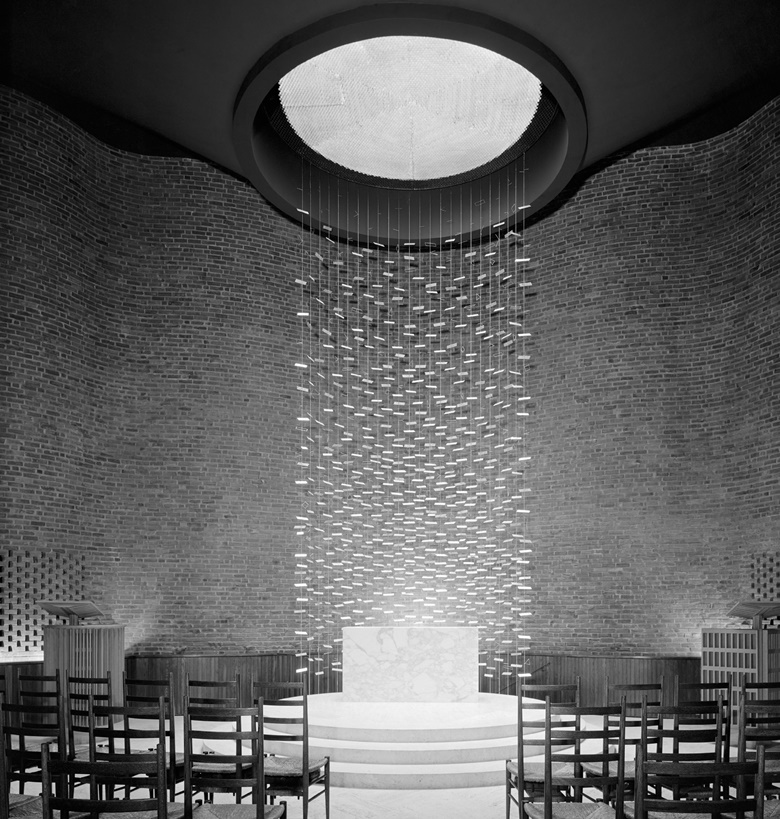
MIT Chapel MIIM Designs

In the most recent Architectural Review magazine, Tom Wilkinson is History Editor of The Architectural Review and the author of “Bricks and Mortals: Ten Great Buildings and the People They Made”, investigates some of the questions that we have been researching at MIIM Designs:


‘What defines a place of worship?

Does it have to be sacrosanct?

Must it display certain signs?

Or is it enough that it feels ‘spiritual’?’


In AD631 (or AH 10) a delegation of Christians from Najran, in present-day Yemen, arrived in Medina to negotiate a treaty with Muhammad. He received the Najrans in the mosque and, although they were unable to agree on certain doctrinal matters, invited them to pray there nonetheless, which they did – facing east.

This episode demonstrates some of the possibilities – and the problems – inherent in the idea of adherents of different faiths sharing spaces of worship. First, there is often no intrinsic impediment to taking the occasional dip. Muslims can pray anywhere, as can Christians, although Mass should only be celebrated on consecrated ground (according to Canon 933, churches of other denominations may only be used in extraordinary circumstances). Catholics aside, Christian worship is now more likely to take place in a light industrial unit or megachurch than in a cruciform building, basilica, rotunda, or any of the other forms that have been developed and disputed across the centuries. As for architectural objections to shacking up on a more permanent basis, despite there being great regional traditions in mosque design, there is no essential mosque-form. As the above list demonstrates, the same can be said for Christian churches.

Read More HERE

METROPOLIS: Pritzker Laureates: We Must Rescue the Role of the Architect /  by Studio MIIM

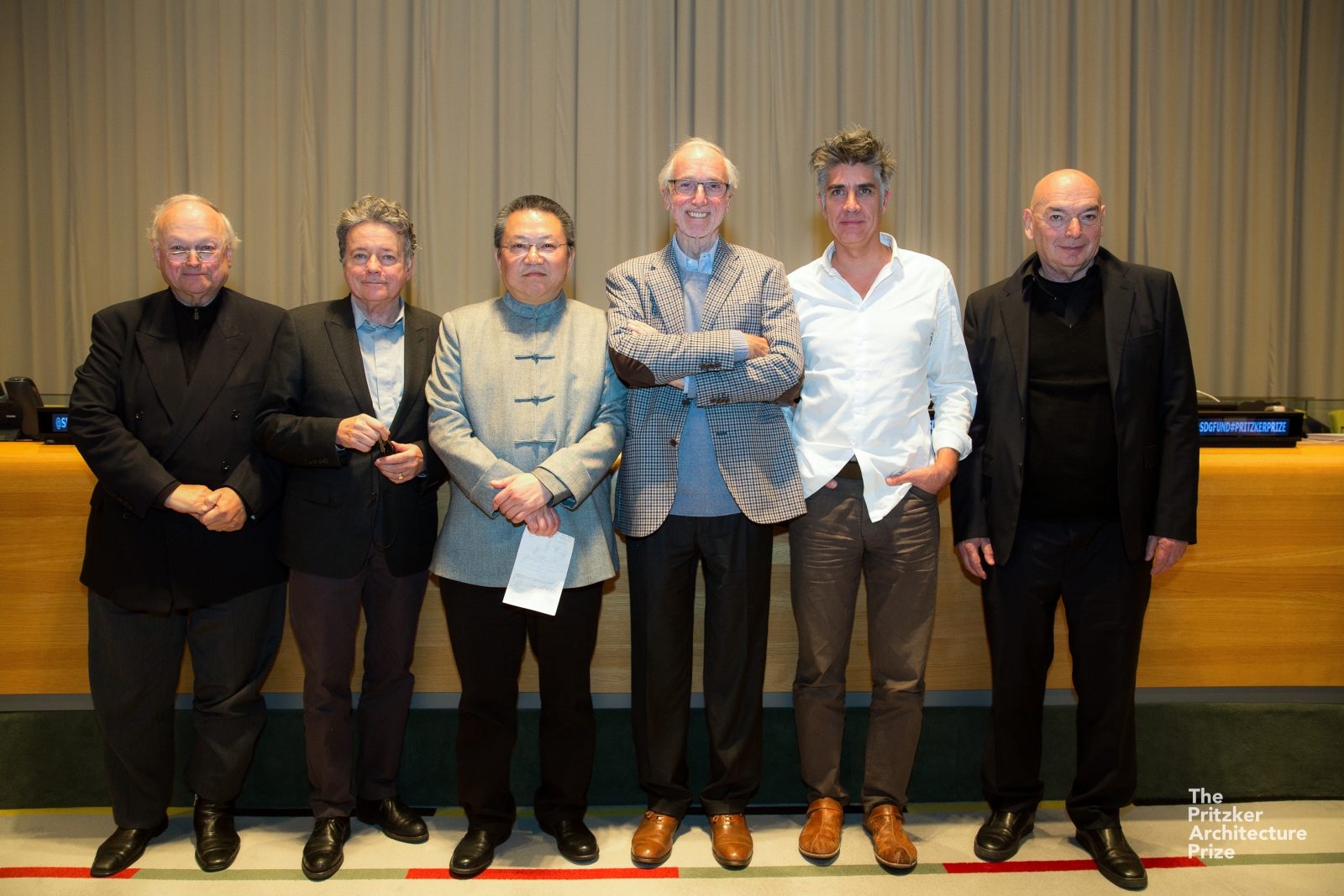
Pritzker Architecture MIIM Designs Architecture

On Tuesday night, seven Pritzker Prize laureates—Richard Rogers, Glenn Murcutt, Christian de Portzamparc, Wang Shu, Renzo Piano, Jean Nouvel, and the newest among the group, Alejandro Aravena—gathered at the United Nations headquarters in New York to discuss what they thought to be the greatest challenge facing the built environment.


Australian architect and 2002 laureate Glenn Murcutt chose not to discuss sustainability, which he has spent his career championing, and instead delivered a rousing, emotional speech about a project that has occupied his mind for the better part of a decade: the Newport Mosque. The mosque has been the source of much controversy in Victoria, Australia, where it will be built. "The real issue," said Murcutt about the public discontent surrounding the project, "is fear"—fear of the unfamiliar that underpins social and religious prejudice around the world. 

Read More HERE

Maryam writes about Fast Fashion buildings /  by Studio MIIM

STRINGER/BANGLADESH/REUTERSRescue workers attempt to rescue garment workers from the rubble of the collapsed Rana Plaza building, in Savar, 30 km (19 miles) outside Dhaka April 28, 2013. Fire broke out on Sunday in a garment factory that collapsed i…

STRINGER/BANGLADESH/REUTERS

Rescue workers attempt to rescue garment workers from the rubble of the collapsed Rana Plaza building, in Savar, 30 km (19 miles) outside Dhaka April 28, 2013. Fire broke out on Sunday in a garment factory that collapsed in the Bangladeshi capital, complicating attempts to find any survivors of a disaster that has killed 377 people

Since designer brands, whether in clothing or custom-made products such as furniture, textile and home goods, are not the fundamental basis of priority goods to sustain a living, often these goods are categorized in secondary or tertiary needs. Therefore, the cost and demand fluctuates based on the consumers market. With today’s economic turmoil, consumers are not in immediate need to buy clothing, let alone “designer” clothing. Thus, retailers such as JC Penny, Mango, Walmart, Fresh Joe, etc. are under pressure to keep overhead of their companies to a minimal low while selling products with a 300%-1000% markup (a profit is made even if the product is on “sale” for a consumer in Europe or the United States). In order for overhead to be kept minimal, sacrifices are made. There are three categories in which the designer can make sacrifices to meet the market’s demand and still gain profit: the quality of the product, the employees, and the factory. Designers will never sacrifice their product. Take Louis Vuitton, for example; rather than selling their product after several years above the marginal price, each year if their line is not sold, they burn the line to avoid sacrificing their brand.


Savar building collapse, Bangladesh. On April 24, 2013, in the Savar Upazila of Dhaka, Bangladesh, an eight-story commercial building named Rana Plaza, collapsed. (Photo Credit: rijans / Flickr)

Savar building collapse, Bangladesh. On April 24, 2013, in the Savar Upazila of Dhaka, Bangladesh, an eight-story commercial building named Rana Plaza, collapsed. (Photo Credit: rijans / Flickr)

Sadly, this 8-story building which had over 3,122 employees, ” most of them female garment workers between the ages of 18 and 20″, did not have adequate walls, based on the 1-hour rating and typical standard doors, which allow for a minimal 1-hour rating and adequate circulation space. By U.S. standards in any given space, there needs to be an emergency exit route without the use of elevators or electrical lifting, down to the ground level. Typically at every 20′-0″ in either direction there must be an emergency exit door for evacuation. This building failed to meet that standard as well.

Originally Published in TIM